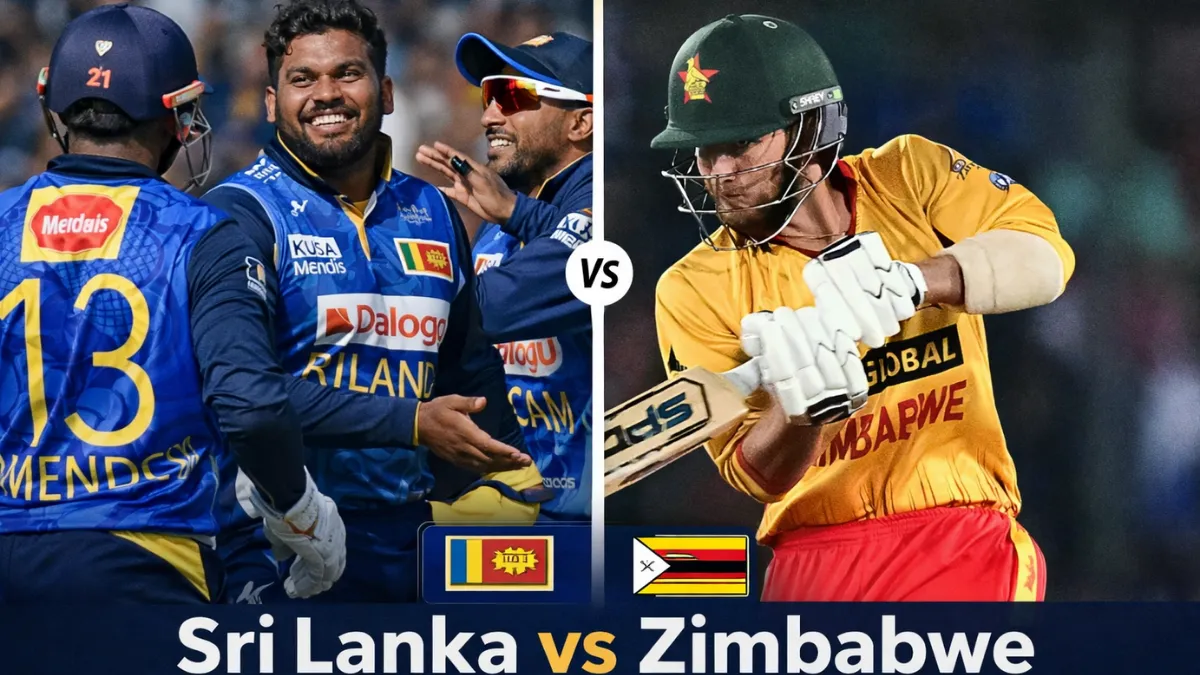
Cricket fans who follow international rankings and team progress often search for sri lanka national cricket team vs zimbabwe national cricket team standings to understand how these two sides compare across formats. While Sri Lanka has historically been stronger in global cricket, Zimbabwe continues to rebuild and improve its competitive level.
This detailed guide explains rankings, head-to-head records, format-wise comparison, and future outlook in a structured manner.
eam Overview
🇱🇰 Sri Lanka national cricket team
- Full Member of ICC
- 1996 ODI World Cup Champion
- 2014 T20 World Cup Champion
- Multiple Asia Cup titles
- Known for strong spin bowling and home dominance
Sri Lanka has been one of Asia’s most successful cricketing nations. The golden era featuring legendary players helped the team reach multiple ICC finals and maintain competitive rankings across formats.
🇿🇼 Zimbabwe national cricket team
- Full Member of ICC
- Strong performances in late 1990s and early 2000s
- Competitive in World Cup qualifiers
- Currently rebuilding with young talent
Zimbabwe represents African cricket outside South Africa and has shown resilience despite administrative and financial challenges.
Format-Wise Standings Comparison
When analyzing sri lanka national cricket team vs zimbabwe national cricket team standings, it is important to look at all three major formats: Test, ODI, and T20I.
est Cricket Standings
Sri Lanka has historically dominated Zimbabwe in the longest format.
Key Comparison Table – Test Format
| Category | Sri Lanka | Zimbabwe |
|---|---|---|
| ICC Test Ranking Position (General Trend) | Higher (Mid Table) | Lower Tier |
| Test Match Experience | Extensive | Limited |
| Home Dominance | Very Strong (Spin Pitches) | Moderate |
| Overseas Wins | Several Historic Wins | Very Few |
Analysis:
- Sri Lanka has defeated top teams like India, Pakistan, and England in Tests.
- Zimbabwe has played fewer Tests due to scheduling gaps.
- Long breaks between series affected Zimbabwe’s consistency.
Result: Clear advantage to Sri Lanka in Test standings.
ODI Format Standings & Head-to-Head
ODI cricket gives a clearer picture of competitiveness.
Head-to-Head Record (Overall Trend)
| Format | Matches Played | Sri Lanka Wins | Zimbabwe Wins |
|---|---|---|---|
| ODI | 60+ | Majority Wins | Few Wins |
(Numbers represent overall historical trend rather than exact current figures.)
ODI Ranking Comparison
| Factor | Sri Lanka | Zimbabwe |
|---|---|---|
| ICC ODI Ranking | Higher | Lower |
| World Cup Success | 1996 Champions | Group Stage/Qualifiers |
| Consistency | High | Improving |
Sri Lanka has dominated most bilateral series. Zimbabwe has occasionally surprised stronger teams, especially in home conditions.
Result: Sri Lanka leads clearly in ODI standings.
T20 International Comparison
T20 cricket narrows the gap slightly.
T20I Performance Table
| Category | Sri Lanka | Zimbabwe |
|---|---|---|
| T20 World Cup Title | 2014 Champions | No Title |
| Upset Wins | Moderate | Several Notable Upsets |
| Youth Development | Structured System | Rapidly Improving |
| Current Ranking Trend | Stable | Rising |
In T20 cricket, unpredictability makes Zimbabwe more competitive. Short-format cricket reduces the gap in skill difference.
Result: Sri Lanka still ahead, but Zimbabwe is closing the gap.
Why Sri Lanka Ranks Higher
Several structural and historical reasons explain Sri Lanka’s stronger standings:
Strong Domestic System
Sri Lanka’s domestic cricket consistently produces skilled batters and world-class spinners.
Regular International Fixtures
More matches against top teams = more ranking points.
ICC Tournament Experience
Winning major tournaments builds confidence and stability.
Balanced Squad Structure
Sri Lanka traditionally maintains depth in both batting and bowling.
Challenges Faced by Zimbabwe
Zimbabwe’s lower rankings are influenced by:
- Administrative issues in the past
- Financial instability
- Limited international exposure
- Fewer bilateral series
However, recent improvements show positive signs in both batting and pace bowling departments.
Impact of Home Conditions
Home advantage plays a crucial role in sri lanka national cricket team vs zimbabwe national cricket team standings comparison.
| Condition | Advantage |
|---|---|
| Spin-Friendly Pitches | Sri Lanka |
| Seaming & Bouncy Conditions | Zimbabwe |
| High-Pressure ICC Events | Sri Lanka |
Sri Lanka dominates on slow, turning tracks, while Zimbabwe performs better at Harare and Bulawayo.
Future Outlook
Both teams are in transitional phases:
Sri Lanka:
- Rebuilding after senior retirements
- Investing in young all-rounders
- Maintaining mid-table ICC rankings
Zimbabwe:
- Developing youth talent
- Improving domestic infrastructure
- Gaining more international exposure
If Zimbabwe continues steady development and secures consistent fixtures, the ranking gap could gradually reduce.
Why Standings Matter
Standings impact:
- Direct qualification for ICC tournaments
- Global reputation
- Sponsorship and funding
- Player confidence
Higher rankings ensure better opportunities and consistent global competition.
Conclusion
The overall sri lanka national cricket team vs zimbabwe national cricket team standings clearly favor Sri Lanka. With World Cup titles, stronger domestic systems, and greater international exposure, Sri Lanka maintains higher rankings across formats.
Zimbabwe, however, remains competitive and determined. With structural improvements and young talent emerging, the team has the potential to narrow the gap in the coming years.
Cricket rankings are dynamic. Performance, consistency, and opportunity ultimately decide future standings. While Sri Lanka currently holds the advantage, upcoming series and tournaments will continue shaping the competitive balance between these two nations.