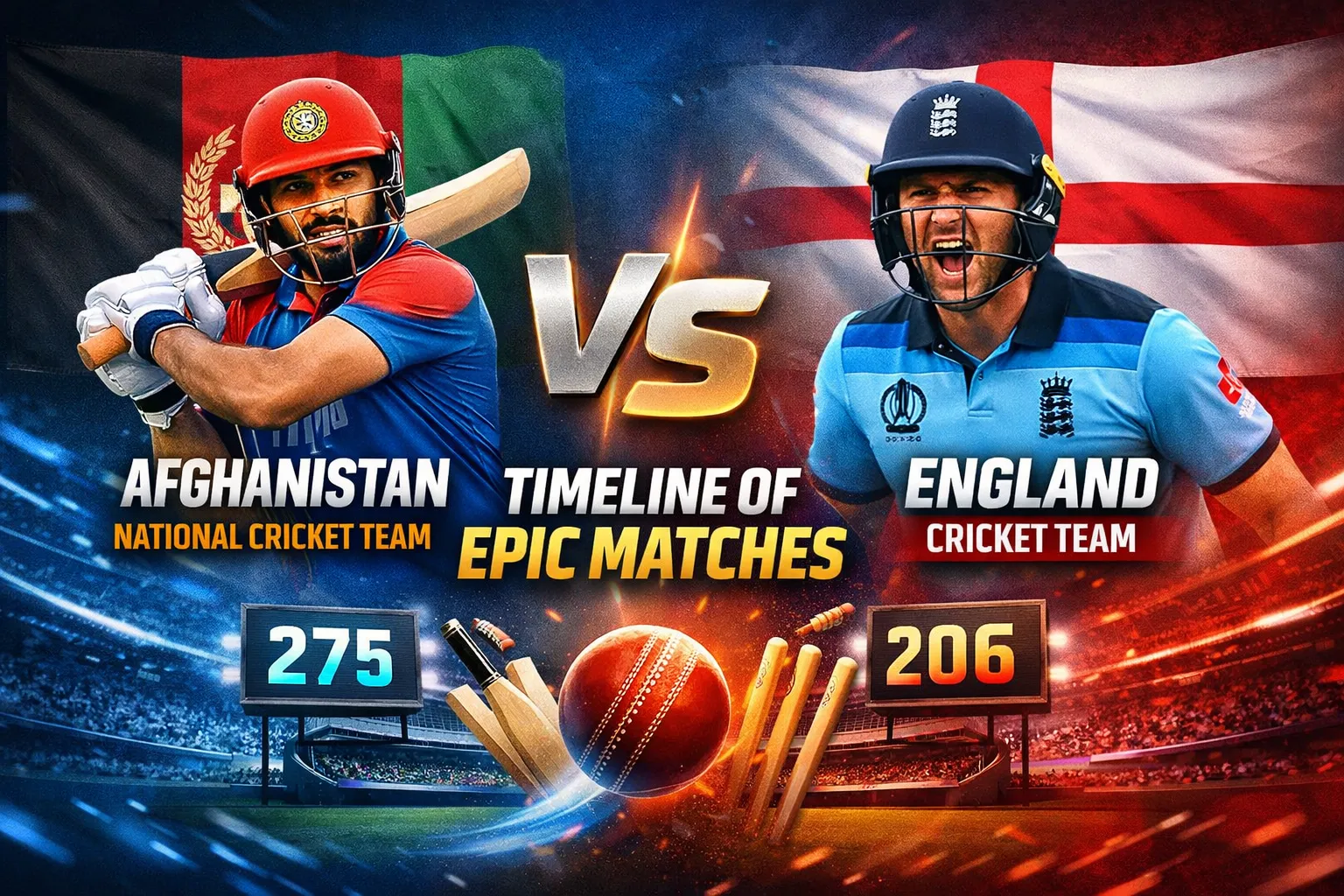
afghanistan national cricket team vs england cricket team timeline reflects one of the most memorable encounters in modern international cricket, a match that reshaped perceptions and highlighted how rapidly the global game is evolving. This contest was not just about runs and wickets; it was about belief, planning, and execution under pressure, with both teams playing a crucial role in producing a result that fans still discuss today.
Match Overview
The clash between the Afghanistan National Cricket Team and the England Cricket Team came with very different expectations. England entered the match as a traditional powerhouse with a deep batting lineup and experienced bowling attack. Afghanistan, on the other hand, arrived with growing confidence, known for their spin strength and fearless approach.
Played on a surface that offered grip and turn, the match quickly turned into a tactical battle. Afghanistan batted first and showed composure well beyond their years, building partnerships and setting a challenging total. England’s reply never truly settled, as disciplined bowling and sharp fielding kept the pressure constant. The final result marked a landmark moment in the Afghanistan national cricket team vs england cricket team timeline, underlining how competitive international cricket has become.
Afghanistan Batting Scorecard
Afghanistan’s innings was built around patience, calculated aggression, and smart strike rotation. The top order laid a steady foundation, while the middle order ensured the momentum never dipped.
| Batsman | Runs | Balls | Fours | Sixes |
|---|---|---|---|---|
| Rahmanullah Gurbaz | 80 | 57 | 8 | 4 |
| Ibrahim Zadran | 28 | 48 | 2 | 0 |
| Rahmat Shah | 19 | 35 | 1 | 0 |
| Hashmatullah Shahidi (c) | 40 | 45 | 3 | 1 |
| Mohammad Nabi | 58 | 44 | 6 | 2 |
| Najibullah Zadran | 12 | 11 | 1 | 0 |
| Rashid Khan | 23 | 14 | 2 | 1 |
| Extras | 15 | – | – | – |
| Total | 275/8 | 50 Overs | – | – |
Afghanistan’s total of 275 looked competitive on paper, but on a slowing pitch, it proved to be more than challenging.
England Bowling Scorecard
England’s bowlers had mixed fortunes. While there were moments of control, Afghanistan’s batsmen capitalized on loose deliveries and rotated the strike effectively.
| Bowler | Overs | Runs | Wickets | Economy |
|---|---|---|---|---|
| Mark Wood | 10 | 55 | 1 | 5.50 |
| Chris Woakes | 8 | 42 | 2 | 5.25 |
| Adil Rashid | 10 | 45 | 1 | 4.50 |
| Moeen Ali | 7 | 38 | 1 | 5.42 |
| Sam Curran | 9 | 60 | 2 | 6.66 |
| Liam Livingstone | 6 | 35 | 1 | 5.83 |
Despite picking up wickets at intervals, England were unable to completely stem the flow of runs, particularly in the final ten overs.
England Batting Scorecard
Chasing 276, England needed a solid start, but early breakthroughs shifted the momentum firmly towards Afghanistan. The middle order tried to rebuild, yet wickets continued to fall at crucial stages.
| Batsman | Runs | Balls | Fours | Sixes |
|---|---|---|---|---|
| Jonny Bairstow | 2 | 7 | 0 | 0 |
| Dawid Malan | 22 | 39 | 2 | 0 |
| Joe Root | 39 | 45 | 4 | 0 |
| Ben Stokes | 25 | 27 | 3 | 1 |
| Jos Buttler (c) | 18 | 15 | 2 | 0 |
| Harry Brook | 66 | 61 | 5 | 2 |
| Sam Curran | 10 | 14 | 1 | 0 |
| Chris Woakes | 6 | 9 | 0 | 0 |
| Adil Rashid | 9 | 12 | 1 | 0 |
| Mark Wood | 5 | 8 | 0 | 0 |
| Extras | 11 | – | – | – |
| Total | 206 all out | 40.3 Overs | – | – |
England were bowled out for 206, falling well short of the target and handing Afghanistan a historic victory.
Afghanistan Bowling Scorecard
Afghanistan’s bowlers executed their plans with discipline, using the conditions brilliantly and never allowing England to settle.
| Bowler | Overs | Runs | Wickets | Economy |
|---|---|---|---|---|
| Mujeeb Ur Rahman | 10 | 28 | 3 | 2.80 |
| Rashid Khan | 10 | 37 | 2 | 3.70 |
| Mohammad Nabi | 9 | 38 | 2 | 4.22 |
| Fazalhaq Farooqi | 7.3 | 40 | 1 | 5.33 |
| Azmatullah Omarzai | 4 | 28 | 1 | 7.00 |
The spin trio, in particular, controlled the middle overs and forced England into risky shots.
Key Match Highlights
The match featured several defining moments that shaped its outcome. Afghanistan’s decision to bat first proved correct as their batsmen adapted better to the surface. Mohammad Nabi’s late-order acceleration gave the innings a strong finish, pushing the total beyond England’s comfort zone.
In the chase, Mujeeb Ur Rahman’s early breakthroughs set the tone. Joe Root and Harry Brook attempted to stabilize the innings, but regular wickets kept England behind the required rate. Rashid Khan’s control in the middle overs tightened the noose, while sharp fielding added to England’s frustration.
This contest now stands as a crucial chapter in the afghanistan national cricket team vs england cricket team timeline, often cited as a turning point in Afghanistan’s rise on the world stage.
Player of the Match
Mohammad Nabi was deservedly named Player of the Match. His all-round performance, scoring a vital 58 runs and picking up two important wickets, showcased his experience and calm under pressure. Nabi’s contribution exemplified the balance Afghanistan achieved between youth and experience.
Why This Match Scorecard Is Important
This scorecard goes beyond numbers. It represents a shift in international cricket, where emerging teams can challenge and defeat established sides through preparation and belief. For Afghanistan, this victory reinforced their reputation as a disciplined and dangerous opponent, especially in conditions that favor spin.
For England, the match served as a reminder of the importance of adaptability and respect for every opponent. Analysts often refer back to this scorecard when discussing tactical lessons and the growing competitiveness of global cricket.
Conclusion
The afghanistan national cricket team vs england cricket team timeline is enriched by matches like this, where the result tells a story of courage, planning, and execution. Afghanistan’s comprehensive performance, reflected clearly in the scorecard, earned them a famous win and global admiration. England, despite the defeat, gained valuable insights that continue to shape their approach.
As cricket continues to expand and evolve, encounters like this ensure the sport remains unpredictable and thrilling. This match will be remembered not only for its outcome but for what it symbolized in the broader journey of international cricket.