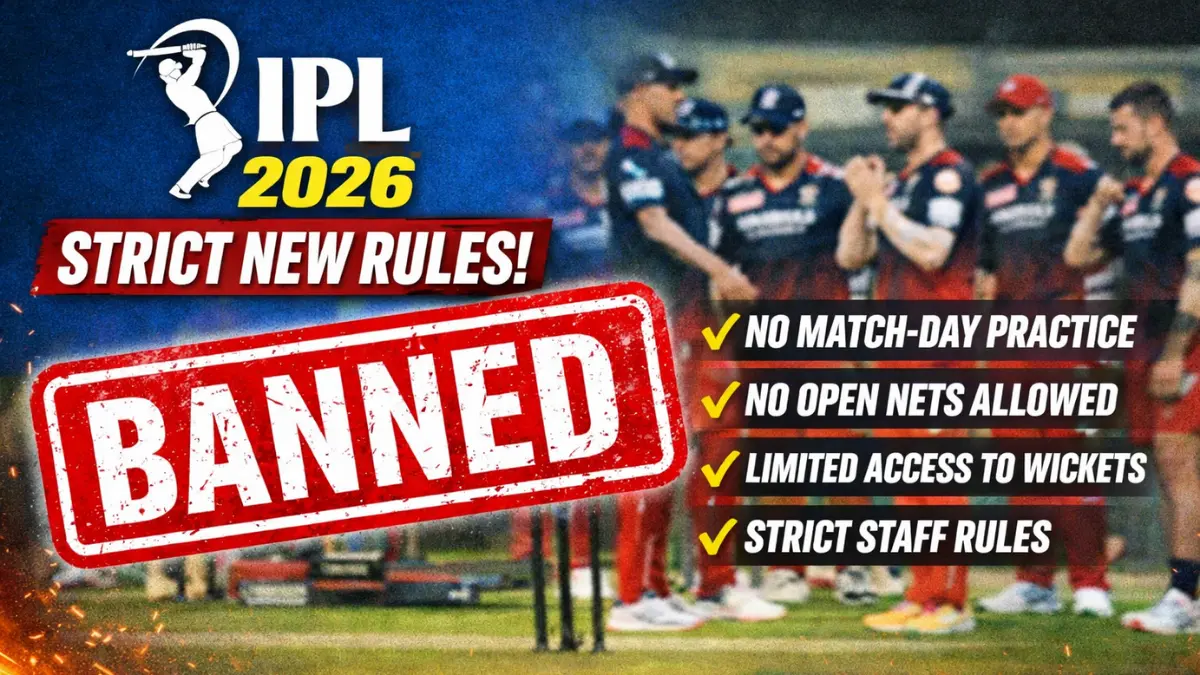
The Indian Premier League 2026 is all set to begin under a far more disciplined and regulated environment, as the Board of Control for Cricket in India (BCCI) has announced a fresh set of strict operational rules.
These updated guidelines significantly tighten practice protocols, restrict access to training areas, and introduce firm match-day conduct regulations. The decision comes in response to growing concerns over unregulated practice sessions, including high-profile incidents like RCB’s intense training scenarios that raised questions around fairness, safety, and pitch usage.
With this move, the BCCI is sending a strong message—IPL 2026 will prioritize structure, discipline, and professionalism like never before.
BCCI’s Updated IPL 2026 Rulebook: What Has Changed?
The latest update is an extension of the March 12 directive but goes much further by defining a complete operational framework for teams.
The new rules clearly outline:
- How teams can conduct practice sessions
- Who is allowed inside training zones
- How players travel for practice
- What activities are permitted on match days
This effectively ends informal and flexible training routines that teams previously enjoyed.
Practice Rules Overhauled: Limited Nets and Strict Monitoring
One of the biggest changes comes in how teams prepare for matches.
Controlled Practice Setup
Teams will now be limited to:
- Two practice nets
- One side wicket on the main square for range hitting
At shared venues like Mumbai, both teams will receive equal access, ensuring fairness and avoiding overcrowding.
No More Open Net Sessions
In a major shift, open practice sessions have been completely banned.
Previously, open nets often led to:
- Overuse of pitches
- Excess crowding
- Unregulated access to players and staff
Now, every session will be scheduled, closed, and closely monitored.
No Sharing of Practice Wickets
A key fairness rule introduced:
- Teams cannot use another team’s practice wickets, even if they are free
This prevents any side from gaining extra preparation time, ensuring a level playing field for all franchises.
Match-Day Practice Banned Completely
The most impactful rule introduced by the BCCI:
No practice allowed on match days
This includes:
- Net sessions
- Fitness drills on the main square
Earlier, teams often conducted light sessions before games. That flexibility is now gone.
Why This Matters
The decision is aimed at:
- Preserving pitch quality
- Reducing player fatigue
- Maintaining competitive balance
Dressing Room & Field Access Now Restricted
The BCCI has also tightened entry rules for sensitive areas.
Only Accredited Personnel Allowed
Access to:
- Dressing rooms
- Field of play
…will be restricted strictly to approved individuals.
Family members and friends:
- Must travel separately
- Can only watch from designated hospitality areas
Approval Mandatory for Support Staff
Support members such as:
- Throwdown specialists
- Net bowlers
…must now be:
- Pre-approved by the BCCI
- Issued special non-match-day accreditation
This ensures better tracking and transparency in team operations.
New Travel Rules for Players
Another notable change focuses on player movement.
Mandatory Team Bus Travel
- Players must travel via the team bus for practice sessions
- Teams can split into two batches if required
This rule improves:
- Security
- Coordination
- Overall discipline
Venue Manager Becomes Central Authority
All practice-related requests must now go through:
- The venue manager
This creates a single point of control, reducing confusion and ensuring smooth coordination between teams and ground staff.
Strict Match-Day Conduct Guidelines
The BCCI has also introduced behavioral rules to be followed during matches.
Accreditation is Compulsory
All staff must carry valid accreditation at all times:
- First violation: Warning
- Second violation: Fine
LED Boards Protection Rules
Players must avoid hitting balls into LED advertising boards, a recurring issue in past training sessions.
Additionally:
- Sitting near LED boards is strictly prohibited
- Designated seating zones will be provided for substitutes and staff
Why BCCI Introduced These Strict Rules
The updated framework addresses several long-standing issues:
1. Pitch Protection
Excessive practice previously led to pitch wear and tear.
2. Fair Competition
Equal access rules eliminate unfair advantages.
3. Professional Structure
Controlled environments ensure smoother operations.
4. Player Workload Management
Reduced practice on match days helps prevent injuries.
5. Commercial Safeguards
Protecting LED boards secures sponsor investments.
Impact on Teams Like RCB
Franchises such as Royal Challengers Bengaluru, known for their high-intensity training routines, will need to adapt quickly.
Key Adjustments:
- No last-minute match-day practice
- Limited access to nets
- Strict monitoring of training sessions
- Reduced flexibility in schedules
While these changes may feel restrictive, they are expected to:
- Improve discipline
- Standardize preparation across teams
A New, More Professional IPL Era
With the league expanding in scale and popularity, the BCCI is clearly moving toward a more structured system.
The message is clear:
- Informal practices are being phased out
- Every activity is now regulated and documented
This marks a significant shift in how IPL teams operate behind the scenes.
Conclusion
IPL 2026 is shaping up to be one of the most disciplined editions in the tournament’s history. With match-day practice banned, access tightly controlled, and strict conduct rules in place, the BCCI is raising the standard of professionalism across the league.
While teams may take time to adjust, the long-term benefits—better pitch quality, fair play, and improved organization—will strengthen the tournament overall.
As the season approaches, all eyes will be on how franchises adapt to this new system and perform under tighter regulations.